What grit sandpaper for glass edge?
What grit sandpaper for glass edge?
Choosing the right grit sandpaper for glass edges is key to achieving a smooth, safe finish without chipping or damaging the glass. Glass is a hard, brittle material, so the grit selection should follow a progressive approach—starting with coarse grits to shape and smooth rough edges, then moving to finer grits for a polished result.
For initial shaping and rough edge smoothing (e.g., after cutting glass or removing sharp burrs), start with 80–120 grit sandpaper. This coarse grit effectively grinds down uneven edges and eliminates sharp protrusions, which is essential for preventing glass chips during subsequent sanding. Note that coarse grits should be used gently and evenly to avoid creating deep scratches that are hard to remove later.
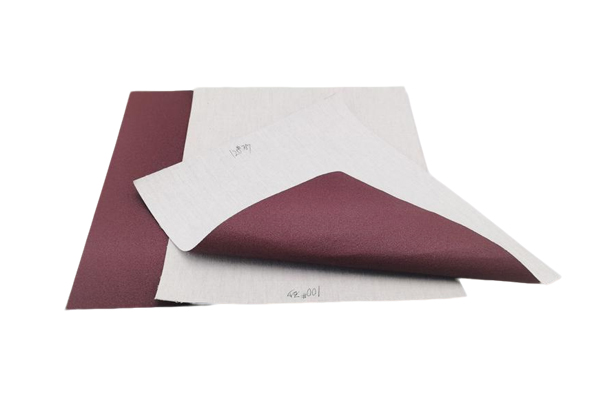
Next, move to 240–400 grit for intermediate smoothing. This medium-fine grit refines the surface, removing the deep scratches left by the coarse grit. It’s ideal for achieving a uniformly smooth edge that’s no longer sharp to the touch. For most everyday glass projects (e.g., DIY glass crafts, small glass fixtures), stopping at 400 grit may be sufficient if a matte finish is acceptable.
For a polished, clear finish (e.g., for decorative glass, table edges, or glassware), use 600–1000 grit sandpaper. This fine grit further minimizes scratches, creating a translucent, smooth surface. For an ultra-smooth, professional-grade finish, you can progress to 1500–2000 grit, though this is often unnecessary for non-specialized applications.
Two critical tips: First, always use wet sanding when working with glass—this reduces friction, prevents glass dust (which is hazardous), and helps the sandpaper glide smoothly, extending its life. Second, opt for silicon carbide or diamond sandpaper (instead of aluminum oxide), as these abrasives are harder and more durable for glass, ensuring consistent performance across grits.
News
Contact Us
Contact: JinKaiYan Abrasives
Phone: +86 13663827325
Tel: +86 13663827325
E-mail: cici8686@foxmail.com
Add: Weidu Industrial zone Xuchang City, Henan province China