How to choose a durable sanding belt?
How to choose a durable sanding belt?
Choosing a durable sanding belt is crucial for optimizing work efficiency, reducing replacement frequency, and controlling costs. The durability of a sanding belt depends on multiple interrelated factors, from abrasive material to backing structure.
First, prioritize abrasive material selection, as it directly determines wear resistance. Aluminum oxide is a versatile option, ideal for sanding wood, ferrous metals, and general-purpose tasks; its self-sharpening property ensures prolonged sharpness. For harder materials like stainless steel or composites, silicon carbide is more durable due to its higher hardness, though it’s less suitable for high-heat applications. Diamond abrasives, while expensive, offer exceptional durability for ultra-hard materials such as ceramics or carbide, making them cost-effective for specialized heavy-duty use.
Second, pay attention to the backing material and thickness. The backing supports the abrasive and resists tearing under tension. Cloth backings (cotton or polyester) are durable for heavy sanding and edge work, with varying weights (J-weight for light tasks, X-weight for heavy-duty) to match workloads. Paper backings are lighter and suitable for fine finishing but less durable for aggressive sanding. Polyester film backings, though rare, excel in wet sanding and high-precision applications due to their water resistance and tear strength.
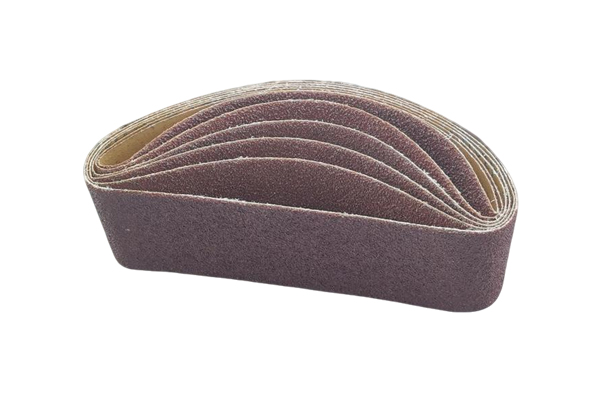
Third, consider the abrasive grain size and bonding agent. Coarse grains (40–80 grit) remove material quickly but may wear faster if used on hard surfaces; fine grains (120+ grit) are for finishing and tend to have longer lifespans in light-duty tasks. The bonding agent (resin, glue, or composite) holds the abrasive to the backing—resin bonds are more heat-resistant and durable than glue, making them ideal for high-speed sanding where friction generates significant heat. Look for “resin-over-resin” bonds for maximum durability in heavy-duty applications.
Finally, match the belt to working conditions and equipment. Ensure the belt size (length, width) fits your sander perfectly; ill-fitting belts cause uneven tension and premature wear. For wet sanding, choose water-resistant backings and bonds to avoid delamination. If sanding heat-sensitive materials, opt for abrasives with good heat dissipation (e.g., aluminum oxide) to prevent clogging and wear.
News
Contact Us
Contact: JinKaiYan Abrasives
Phone: +86 13663827325
Tel: +86 13663827325
E-mail: cici8686@foxmail.com
Add: Weidu Industrial zone Xuchang City, Henan province China