The Versatile Utility and Benefits of Emery Cloth
The Versatile Utility and Benefits of Emery Cloth
One of the most prominent advantages of emery cloth is its versatility across materials and applications. Unlike some specialized abrasives that are limited to specific surfaces, emery cloth excels in working with a wide array of materials, including metals (steel, iron, aluminum, brass), wood, plastic, and even stone. In metalworking, for instance, it is widely used to remove rust, corrosion, and burrs from metal surfaces, preparing them for welding, painting, or assembly. Auto mechanics rely on emery cloth to clean and smooth engine parts, brake components, and metal fittings, ensuring optimal performance and longevity of automotive systems. Woodworkers, on the other hand, use finer grades of emery cloth to sand wooden surfaces, refining the texture and preparing them for staining or varnishing—its flexibility allowing it to conform to curved and irregular surfaces that rigid sandpapers struggle to reach.
Beyond its versatility, emery cloth boasts superior durability and long-lasting performance, a trait that sets it apart from many conventional abrasives. The cloth backing, typically made from cotton, polyester, or a blend of fibers, is inherently stronger and more tear-resistant than the paper backing used in most sandpapers. This robust backing ensures that emery cloth can withstand the rigors of heavy-duty applications, such as aggressive sanding of hard metals, without tearing or disintegrating prematurely. Additionally, the abrasive particles (emery) are tightly bonded to the cloth, minimizing particle loss during use. This not only extends the lifespan of the emery cloth but also ensures consistent abrasion throughout its use, avoiding uneven sanding or finishing that can compromise the quality of the workpiece. For professionals who rely on consistent results and cost-effectiveness, the durability of emery cloth translates to fewer replacements and reduced downtime, making it a cost-efficient choice in the long run.
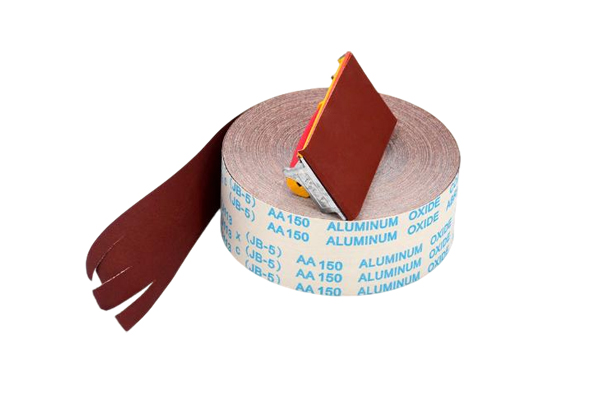
Another key benefit of emery cloth is its adaptability to different finishing requirements through varying grit sizes. Grit size refers to the number of abrasive particles per square inch, with lower numbers indicating coarser grits (for heavy material removal) and higher numbers indicating finer grits (for smooth finishing). Emery cloth is available in a wide range of grit sizes, from coarse (40–80 grit) for shaping and removing large imperfections, to medium (100–180 grit) for general sanding, to fine (240–400 grit) for achieving a smooth, polished surface. This range allows users to tailor their choice of emery cloth to the specific task at hand: for example, a coarse grit can quickly remove rust from an old metal tool, while a fine grit can refine the surface of a wooden craft to a silky smooth finish. Moreover, the flexibility of the cloth backing enhances the control users have over the sanding process, enabling precise finishing even on delicate or intricate surfaces.
Emery cloth also offers practical advantages in terms of ease of use and maintenance. Its flexible nature makes it easy to handle and maneuver, even in tight spaces or around complex shapes—such as the nooks and crannies of automotive parts or the curves of a wooden chair leg. Unlike rigid abrasives, emery cloth can be cut into smaller pieces to fit specific tools, such as sanding blocks, orbital sanders, or even wrapped around a finger for detailed work. Additionally, emery cloth is relatively resistant to clogging, especially when used on non-ferrous materials, as the cloth backing allows for better dust dispersion compared to paper-backed sandpapers. When clogging does occur, it can often be easily removed by tapping the emery cloth against a hard surface or using a wire brush, restoring its abrasive power and extending its usability.
News
Contact Us
Contact: JinKaiYan Abrasives
Phone: +86 13663827325
Tel: +86 13663827325
E-mail: cici8686@foxmail.com
Add: Weidu Industrial zone Xuchang City, Henan province China