The Difference Between Blue and Green Scouring Pads
The Difference Between Blue and Green Scouring Pads
The most fundamental difference between blue and green scouring pads lies in their abrasiveness level—a factor determined by the type and density of abrasive particles embedded in the pad’s fibers. Green scouring pads are universally recognized as the more abrasive option. Typically made from synthetic fibers (such as nylon or polyester) infused with coarse abrasive particles like aluminum oxide or silicon carbide, they are engineered for heavy-duty cleaning tasks. The high abrasiveness allows them to cut through tough, baked-on food residues, grease buildup, rust, and grime that milder cleaners or pads struggle to remove. In contrast, blue scouring pads are classified as medium to low abrasiveness. They feature finer abrasive particles (if any) or are made from softer synthetic fibers, designed for everyday cleaning tasks that require gentleness without sacrificing cleaning power.
This difference in abrasiveness directly translates to their material composition. Green scouring pads often have a thicker, denser structure with rigid fibers to support the coarse abrasive particles. Some green pads even have a layered design, with an abrasive side for scrubbing and a softer side for wiping, though the primary cleaning surface remains highly abrasive. Blue scouring pads, on the other hand, have a lighter, more flexible construction. Many blue pads are either lightly abrasive (with fine particles) or non-abrasive (made from microfiber or foam), focusing on lifting dirt rather than scraping it. This structural variation also affects durability: green pads tend to be more robust and long-lasting for heavy use, while blue pads are softer and better suited for regular, gentle cleaning.
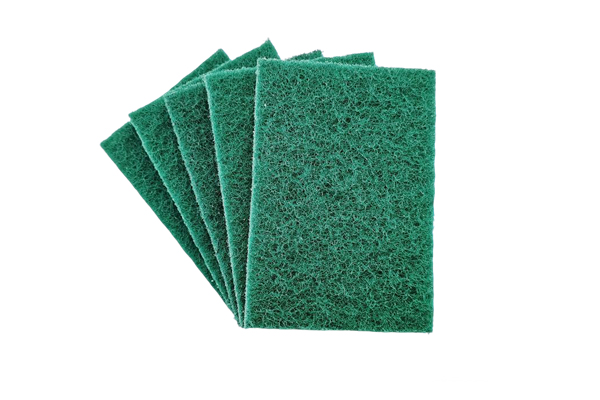
When it comes to ideal applications, the two pads cater to vastly different cleaning scenarios. Green scouring pads are the go-to choice for heavy-duty tasks in commercial kitchens, workshops, or outdoor cleaning. They excel at cleaning grill grates, oven interiors, cast-iron cookware, concrete surfaces, and metal tools—surfaces that can withstand abrasion without damage. In residential settings, green pads are useful for tackling tough stains on tile grout, stubborn food buildup on stainless steel pots (but not polished stainless steel surfaces), or removing paint splatters from hard surfaces. However, their high abrasiveness makes them unsuitable for delicate surfaces like non-stick pans, glass, polished stone, or fine wood, as they can scratch or dull these materials.
Blue scouring pads, by virtue of their milder abrasiveness, are perfect for everyday cleaning tasks in homes and light commercial environments. They are safe for use on a wide range of surfaces, including stainless steel appliances (refrigerators, sinks), ceramic dishes, glass cooktops (with caution), countertops (laminate, quartz, or solid surface), and bathroom fixtures (tubs, sinks, toilets). Blue pads effectively remove everyday dirt, light grease, food splatters, and soap scum without scratching or damaging delicate finishes. For example, a blue pad paired with dish soap can gently clean a stainless steel sink without compromising its protective chromium oxide layer, or wipe down a ceramic stovetop to remove spills. Many blue pads are also designed for use with non-abrasive cleaners, making them a versatile choice for routine maintenance.
Another practical distinction is safety for surfaces and users. Green scouring pads, due to their coarse fibers and abrasive particles, pose a higher risk of scratching or marring surfaces if used incorrectly. They can also leave small abrasive particles behind, which may scratch surfaces during subsequent cleaning or use (e.g., if particles get stuck on a sponge and are used on glass). For users, green pads can be harsh on hands, often requiring gloves to prevent irritation or cuts from the rigid fibers. Blue scouring pads, being softer, are gentler on both surfaces and hands. They are less likely to cause scratches, and their flexible fibers reduce the risk of hand irritation, making them more comfortable for extended cleaning sessions.
News
Contact Us
Contact: JinKaiYan Abrasives
Phone: +86 13663827325
Tel: +86 13663827325
E-mail: cici8686@foxmail.com
Add: Weidu Industrial zone Xuchang City, Henan province China